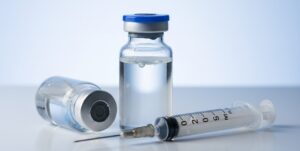
Peptides are one of the biggest conversations in health, fitness, weight loss, longevity, and performance right now. GLP-1 medications have changed the way people think about obesity treatment. Other peptides are being discussed for recovery, inflammation, tissue repair, appetite control, hormone signaling, and metabolic health. For many people, the excitement is understandable. These compounds can be powerful.
But that is exactly why they should not be treated casually.
The truth about peptides is that they can be useful tools in the right context, but they can also become risky when people use unverified products, copy online dosing advice, misunderstand syringes, chase the cheapest vial, or assume that “amino acids” automatically means safe. A peptide may be built from amino acids, but that does not mean every peptide product is harmless, properly made, accurately dosed, or appropriate for human use.
This is especially important with GLP-1-based therapies and investigational compounds such as retatrutide. These are not ordinary supplements. They affect appetite, digestion, glucose control, metabolism, and body weight. Used appropriately under medical supervision, they may help certain people. Used recklessly, they can contribute to side effects, dosing errors, rapid weight loss, muscle loss, rebound hunger, and weight regain.
This article explains why peptide dosing matters, why sourcing matters, why “research use only” products deserve caution, why the lowest price can be dangerous, and why protein, resistance training, and a long-term plan are non-negotiable.
Peptides Are Powerful Signaling Compounds
A peptide is a short chain of amino acids. In the body, many peptides act like signals. They can tell cells or systems to do something. Some influence appetite. Some affect blood sugar. Some are involved in tissue repair, inflammation, immune activity, or hormone signaling.
That signaling role is what makes peptides interesting. It is also what makes them serious. When a compound changes a biological signal, the effect depends on the person, dose, timing, route, quality, medical history, and other medications or health conditions.
It is too simplistic to say, “It is just amino acids.” Many powerful substances come from natural building blocks or are based on compounds that exist in nature. What matters is how the compound is structured, how it is manufactured, how it is delivered, how much is used, and what it does in the body.
Some peptide-based medications are FDA-approved for specific conditions. Others are investigational. Others are sold online as research products. These categories should not be mixed together. A prescription medication from a licensed pharmacy is not the same as a vial from an unknown online seller.
GLP-1s Are Not Casual Weight-Loss Tools
GLP-1 medications and related therapies can be very effective for weight loss and metabolic health in properly selected patients. They can reduce appetite, improve satiety, and support better glucose regulation. For people with obesity, type 2 diabetes, or significant weight-related health risks, these medications may be appropriate under medical supervision.
However, appetite suppression is not the whole story. When appetite drops too much, people may eat far fewer calories than expected. That can create rapid weight loss, but rapid weight loss is not always healthy weight loss. If protein is low and resistance training is missing, some of the weight lost may come from lean tissue rather than fat alone.
GLP-1 medications should not be treated as a way to avoid changing habits. They should be used, when appropriate, as part of a structured plan that includes food quality, protein, strength training, side effect monitoring, lab work, and long-term maintenance.
The goal is not simply to become lighter. The goal is to become healthier, stronger, more insulin sensitive, more mobile, and better able to maintain the results.
Retatrutide Requires Extra Caution
Retatrutide is often discussed online under shortened names, but it is important to be clear: retatrutide is investigational. Lilly states that retatrutide has not been approved by any regulatory agency and is legally available only through Lilly clinical trials. Any product sold to consumers outside those trials cannot be verified for safety, purity, or dosing. Lilly: What to Know About Retatrutide
This matters because online demand can create a market for unregulated products. A vial labeled as retatrutide may not contain retatrutide. It may contain the wrong amount. It may contain impurities. It may be contaminated. It may be degraded. It may have a certificate that does not match the batch. The buyer may have no reliable way to know.
Even if the compound itself proves valuable in clinical trials, that does not make black-market or research-labeled products safe for personal use. Clinical trials involve screening, monitoring, quality-controlled drug supply, adverse event tracking, and medical oversight. Self-experimentation does not.
Why Dosing Mistakes Are a Real Risk
Dosing is one of the biggest safety issues with GLP-1s and peptide products. The FDA has reported adverse events, including some requiring hospitalization, related to dosing errors with compounded semaglutide injectable products. Some errors involved patients measuring and self-administering incorrect doses from multi-dose vials, while others involved provider miscalculations. FDA: Dosing Errors Associated With Compounded Semaglutide
This is not a small issue. Many people do not understand syringe markings. Some do not understand the difference between milligrams, milliliters, units, and concentration. Others reconstitute products incorrectly, meaning the amount of liquid added changes how much active compound is in each draw. A person may think they are taking a small dose while actually taking several times more than intended.
With injectable products, misunderstanding concentration can create serious problems. The dose is not just “how much liquid is in the syringe.” The dose depends on how much active compound is in the vial and how much liquid it was mixed with. If the math is wrong, the dose is wrong.
This is why medical instruction matters. People should not guess. They should not follow random online charts. They should not use a vial mixed by a friend. They should not assume every insulin syringe is being interpreted correctly. If a medication is being prescribed, the patient should be taught exactly how to measure the dose and what each marking means.
The Minimum Effective Dose Mindset
One of the smartest principles in peptide therapy is using the minimum effective dose. The question should not be, “How much can I take?” The better question is, “What is the lowest dose that produces the intended effect while minimizing side effects?”
More is not automatically better. Higher doses may increase nausea, appetite suppression, fatigue, dizziness, dehydration, headaches, blood pressure changes, heart rate changes, or other side effects. If someone feels awful, cannot eat enough protein, cannot train, and cannot function, the dose may not be supporting the larger health goal.
With weight-loss medications, people often increase the dose because the scale slows down. But a plateau does not automatically mean the dose needs to rise. It may mean calories need review, protein is too low, activity has changed, water weight is fluctuating, sleep is poor, or the body is adapting. Dose changes should be made with a qualified clinician, not out of impatience.
When the product is powerful, conservative dosing is not weakness. It is risk management.
Side Effects Are Signals
Side effects should not be ignored. If someone is experiencing persistent nausea, vomiting, dizziness, headaches, severe constipation, dehydration, weakness, heart palpitations, blood pressure changes, or major fatigue, the body is sending a signal.
That signal may mean the dose is too high, food intake is too low, hydration is poor, electrolytes are off, the product is not appropriate, or there is an underlying medical issue. The correct response is not to push through blindly. The correct response is to contact a healthcare professional and reassess.
This is especially important for people with high blood pressure, heart rhythm concerns, diabetes, kidney disease, liver disease, gallbladder issues, eating disorder history, or multiple medications. A compound that seems manageable for one person may be inappropriate for another.
Cheap Peptides Can Be Expensive Mistakes
When it comes to peptides, supplements, medications, and health products, the cheapest option is not always the best value. A product going into the body needs quality control. That costs money.
A very cheap vial raises obvious questions. What is actually in it? Was it tested? Was it sterile? Was it stored correctly? Does the certificate match the batch? Is the dose accurate? Is the seller legitimate? Can the company answer questions? Is there medical oversight?
Price shopping can backfire because a fake or low-quality product is not a bargain. It is either wasted money or a potential health risk. This applies to peptides, but it also applies to supplements, protein powders, creatine, vitamins, and other wellness products.
A responsible buyer should value testing, transparency, sourcing, reputation, and professional guidance more than the lowest price. If someone cannot afford a legitimate medical route, that does not make an unsafe route safer.
Why Testing and Certificates Matter—but Are Not Perfect
Third-party testing and Certificates of Analysis can be useful, but they are not foolproof. A COA should be batch-specific, current, and tied to the exact product being sold. A seller can show a real COA from a different batch. A seller can show an old COA. A seller can display testing that does not verify sterility or endotoxins. A seller can use a document that looks legitimate but does not prove what is in the buyer’s vial.
Purity percentage is also not the only issue. For injectable products, sterility matters. Endotoxin levels matter. Storage matters. Reconstitution matters. Handling matters. A product can appear pure but still be unsafe if it is contaminated or improperly prepared.
This is why the best option is medical supervision through licensed professionals and reputable pharmacies whenever possible. When products fall outside that system, risk increases.
Rapid Weight Loss Can Create New Problems
Many people using GLP-1s want fast weight loss. Fast results feel exciting, but losing weight too quickly can create problems, especially when protein and resistance training are missing.
A recent review on GLP-1-based therapies noted that lean mass changes vary across studies, and in some trials the proportion of weight lost as lean mass has raised concerns. PubMed: Changes in Lean Body Mass With GLP-1-Based Therapies
Lean mass is not exactly the same as muscle, but muscle preservation is still a major concern during weight loss. Muscle supports strength, glucose control, mobility, metabolism, posture, balance, and long-term independence. A person who loses scale weight but loses too much lean tissue may become smaller but less healthy.
This is why weight-loss success should not be judged only by pounds lost. A better plan tracks waist size, strength, energy, blood pressure, glucose markers, body composition when possible, and the ability to maintain normal daily function.
Protein and Lifting Are Non-Negotiable
No matter how weight loss happens, protein and resistance training matter. This is true with GLP-1s, calorie deficits, keto, carnivore, low-fat diets, or any other method.
Protein provides the building blocks for muscle repair and maintenance. Resistance training gives the body a reason to keep muscle while weight is coming down. Without both, the body may be more likely to lose lean tissue during a calorie deficit.
Strength training does not have to mean extreme bodybuilding. It can include machines, dumbbells, resistance bands, bodyweight exercises, or supervised training. The key is progressive resistance and consistency. Walking and cardio are useful for health, but they do not replace the muscle-preserving signal of resistance training.
For people using GLP-1s, the appetite may be low, so protein has to be intentional. Meals should be built around protein first. If someone cannot eat enough, that should be discussed with a clinician, because the dose or nutrition plan may need adjustment.
The Exit Plan Matters
Starting a GLP-1 is one decision. Stopping or maintaining results is another. Many people focus on how to lose weight but do not plan for what happens later.
Research from the STEP 1 trial extension found that participants regained a substantial portion of lost weight after stopping semaglutide and lifestyle intervention. This supports the idea that obesity is often a chronic condition requiring long-term planning, not a short-term crash diet. PubMed: Weight Regain and Cardiometabolic Effects After Withdrawal of Semaglutide
When appetite returns, old habits can return too. If the person has not built new eating patterns, protein habits, strength training, and maintenance structure, rebound weight gain can happen. If muscle was lost during the weight-loss phase, regain may come back with a higher body-fat percentage than before.
An exit plan may include ongoing medical follow-up, a maintenance-dose discussion, nutrition coaching, strength training, regular weigh-ins, lab monitoring, and clear rules for responding to early regain. This should be planned before the person is already struggling.
Do Not Copy Online Protocols
Online communities can be useful for learning terms, hearing experiences, and finding questions to ask a clinician. But they should not be treated as medical authority.
A protocol that worked for one person may be unsafe for another. The person online may not know their own concentration, product quality, side effects, lab markers, or long-term outcome. They may be losing weight quickly but also losing muscle. They may be using an unverified product. They may be giving advice after only a few weeks of experience.
Medical decisions should not be based on the loudest person in a forum. They should be based on the individual’s health history, goals, labs, medications, risk factors, and professional guidance.
What to Ask Before Using Any Peptide
Before using a peptide or GLP-1-related therapy, ask these questions:
- What condition or goal is this supposed to address?
- Is it FDA-approved, prescribed, compounded, investigational, or research-only?
- Who is supervising the treatment?
- What is the exact dose in milligrams or micrograms?
- What is the concentration after reconstitution?
- Do I understand the syringe markings?
- What side effects should trigger a call to a clinician?
- How will blood pressure, glucose, labs, and body composition be monitored?
- How will I protect muscle with protein and resistance training?
- What is the maintenance or exit plan?
If those questions cannot be answered clearly, the plan is not ready.
Peptides Are Not Bad—Carelessness Is
A balanced view is important. GLP-1s and peptide-based therapies are not automatically bad. Many people may benefit from medically supervised treatment. Some compounds may become important tools in obesity medicine, metabolic health, recovery, and longevity care.
The real problem is careless use. Unverified products, poor dosing education, extreme calorie restriction, no protein plan, no strength training, and no medical follow-up can turn a potentially useful tool into a dangerous gamble.
Peptides should be treated with the same seriousness as any other powerful medical tool. They deserve respect, not fear. But respect means asking better questions, using safer sources, starting conservatively when appropriate, and working with professionals who understand the risks.
Final Thoughts
The truth about peptides is that they are neither miracle cures nor automatically dangerous. They are tools. In the right hands, for the right person, with the right product, dose, and monitoring, they may be helpful. In the wrong context, they can become risky.
GLP-1s and investigational compounds like retatrutide are powerful enough that people should not treat them like ordinary supplements. Dosing matters. Product quality matters. Medical supervision matters. Protein matters. Lifting weights matters. Patience matters. Exit planning matters.
The safest mindset is simple: do not chase the cheapest product, do not copy internet dosing, do not ignore side effects, and do not assume fast weight loss equals healthy progress. Build the foundation first. Work with qualified professionals. Verify quality. Protect muscle. Plan for maintenance.
Peptides may be part of the future of health and medicine, but the future should be built on evidence, quality, and responsibility—not guesswork.
Video Summary
Disclaimer: This content is for educational purposes and does not replace personalized medical advice.
For more evidence-based nutrition and fitness tips, subscribe to our channel:
https://www.youtube.com/@Vitality-and-Wellness