Peptide Safety, Regulation and Quality
Peptides are everywhere right now—from prescription weight-loss medications to experimental recovery compounds promoted online. But asking whether “peptides are safe” is a little like asking whether “medications are safe.” The answer depends on which compound you mean, how well it has been studied, who manufactured it, why it is being used, and whether its dose and treatment plan are medically appropriate.
Quick answer: Some peptide-based medications have extensive human data and FDA approval for specific conditions. Others remain experimental, compounded, or sold as “research use only” products with limited human safety data. Approval status, manufacturing quality, purity, sterility, dosing, interactions, and medical supervision all affect risk.
What you will learn:
Peptides have gone from a relatively specialized area of medicine and research to one of the hottest topics in fitness, longevity, weight loss and recovery.
That popularity creates a problem.
The word peptide is now being used as if it describes one unified class of products with the same level of evidence and the same risk profile.
It does not.
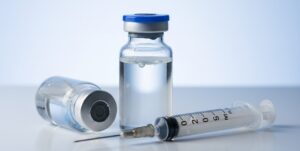
A prescription peptide-based medication that has gone through controlled clinical trials and FDA review is fundamentally different from a vial purchased from a website labeled “for research use only.”
A medication prepared for an individual patient by a licensed compounding pharmacy represents another category entirely.
And an experimental peptide being studied in a regulated clinical trial has a different risk profile from all three.
Understanding those differences is the first step toward having a reasonable conversation about peptide safety.
“Peptide” Does Not Automatically Mean Experimental
Peptides are relatively short chains of amino acids. The human body naturally produces many signaling peptides, and scientists have developed peptide-based medicines for numerous conditions.
Modern medicine already includes peptide therapeutics that have undergone FDA’s standard drug-approval process.
So the statement “peptides are unapproved” is incorrect.
At the same time, the fact that some peptide medicines are approved does not mean that every peptide advertised online has demonstrated safety and effectiveness.
Peptide describes the molecule—not its regulatory status
A peptide may be an FDA-approved medicine, a legitimate investigational drug, an ingredient used in a compounded preparation, or an unapproved research chemical sold directly to consumers.
A 2025 review focused specifically on therapeutic peptide safety noted that peptide medicines continue to grow rapidly while manufacturing impurities and unintended immune responses remain important regulatory concerns.
Source: 2025 review of therapeutic peptide immunogenicity.
The Four Peptide Categories Consumers Should Understand
1. FDA-Approved Drugs
Specific medications reviewed for identity, manufacturing quality, safety and effectiveness for defined indications.
2. Compounded Drugs
Custom medications prepared by qualifying pharmacists or physicians for particular patient needs. The finished compounded drug is not FDA-approved.
3. Investigational Drugs
Compounds being formally studied in clinical trials where safety and effectiveness have not yet been fully established.
4. Research Chemicals
Products sold outside the approved-drug pathway, often labeled “research use only” or “not for human consumption.” Human safety and product quality may be uncertain.
Putting all four into the same category creates misleading claims in both directions.
Saying “peptides are dangerous because they are experimental” ignores legitimate approved medicines.
Saying “peptides are safe because doctors prescribe peptides” ignores the very different evidence behind experimental products.
What FDA Approval Does—and Does Not—Mean
FDA approval does not mean that a drug has zero side effects.
Every effective medication can have risks.
FDA approval means that the agency has reviewed the drug application’s evidence and determined that the benefits outweigh the known risks for the approved use when the medication is used according to its labeling.
Approved drugs also have defined manufacturing standards, specifications, labeling and ongoing safety surveillance.
That is considerably different from an anonymous vial with no FDA-reviewed human data.
| FDA Approval Does Mean | FDA Approval Does Not Mean |
|---|---|
| The drug went through a formal review process. | The drug can never cause side effects. |
| FDA evaluated evidence for specified uses. | The drug is appropriate for every person. |
| Manufacturing and quality standards are defined. | Any dose is safe. |
| Approved labeling explains risks and appropriate use. | Every off-label or internet-promoted use has been proven. |
There is another common misunderstanding worth correcting: FDA regulates much of the U.S. food supply, but conventional foods themselves are generally not individually “FDA-approved” in the way prescription drugs are.
A bottle of cooking oil or a box of cereal being sold legally therefore is not a useful comparison with an FDA-approved prescription drug.
Source: FDA: Is It Really “FDA Approved”?.
Compounded Peptides Are Not the Same as FDA-Approved Drugs
Compounding can serve an important medical purpose.
For example, a patient may need a medication prepared without a particular inactive ingredient because of an allergy, or in a dosage form that is not commercially available.
But FDA is explicit about one fact:
Compounded drugs are not FDA-approved.
FDA does not review each compounded product for safety, effectiveness or quality before it reaches patients.
Poor compounding practices can result in:
- Too much active ingredient
- Too little active ingredient
- Microbial contamination
- Incorrect ingredients
- Quality or potency problems
This distinction is particularly important in the peptide world because consumers may see the words “prescription,” “pharmacy” or “compounded” and assume the product itself therefore received FDA approval.
It did not.
Prescription does not automatically equal FDA approval
A clinician may prescribe a compounded drug under circumstances allowed by law, but the compounded finished product does not undergo the same FDA premarket review as an approved medicine.
Source: FDA Compounding Questions and Answers.
“Research Use Only” Should Mean Exactly That
One of the biggest safety concerns in the current peptide market is the direct-to-consumer sale of compounds labeled:
- Research use only
- Not for human consumption
- Laboratory reagent
- For analytical purposes only
Those phrases should not be interpreted as a clever legal workaround for buying a human medication.
A research chemical does not come with the same assurance that an approved prescription drug provides.
Potential problems include:
- The vial may contain the wrong molecule.
- The concentration may differ from the label.
- The peptide may have degraded during manufacturing, shipping or storage.
- Peptide-related impurities may be present.
- An injectable product may not be sterile.
- Endotoxin contamination may not be adequately controlled.
- There may be little or no human safety information for the compound.
These are not theoretical manufacturing details. For injectable products, contamination or a major potency error can become a serious medical problem.
Does a Certificate of Analysis Prove a Peptide Is Safe?
A certificate of analysis, commonly called a COA, can provide useful information—but it should not be treated as a universal safety certificate.
A legitimate laboratory report might evaluate:
- Identity
- Purity
- Measured concentration
- Selected contaminants
But “99% pure” does not answer every important question.
| A COA May Help Answer | A COA Does Not Automatically Answer |
|---|---|
| Does the tested sample appear to contain the claimed molecule? | Was the vial you personally received actually represented by that sample? |
| What percentage of the tested sample met a particular purity assay? | Is it sterile for injection? |
| Was a particular contaminant tested? | Were all clinically important contaminants tested? |
| What did the laboratory measure at one point in time? | Is the compound clinically safe or effective in humans? |
Injectable products create particular concern because identity and chemical purity are only part of pharmaceutical quality. Sterility, endotoxin control, particulates, stability and appropriate manufacturing conditions matter too.
There is also the question of whether the COA itself can be independently authenticated.
A screenshot uploaded by a seller is not equivalent to FDA review of a drug-manufacturing process.
Peptide Impurities Can Affect the Immune System
Peptide manufacturing is technically demanding.
Impurities and aggregation are not merely cosmetic quality issues. They can potentially change how the immune system responds to a therapeutic peptide.
Researchers from FDA’s Center for Drug Evaluation and Research noted in a 2025 review that product-related factors, including impurities, can contribute to immunogenicity risk.
Immunogenicity occurs when the immune system responds to a therapeutic peptide or protein in an unintended way, potentially producing anti-drug antibodies.
Depending on the compound and immune response, this may:
- Reduce drug effectiveness
- Alter how quickly the drug is cleared
- Produce hypersensitivity reactions
- Create other immune-mediated effects
This is one reason sophisticated peptide-drug manufacturing involves much more than proving that the primary peptide sequence exists in a vial.
More Is Not Better
One point from peptide discussions that deserves emphasis is that increasing a dose because results have slowed is not automatically appropriate.
A medication’s dose is part of its safety profile.
More exposure can mean more pharmacologic effect, but it can also mean more:
- Nausea
- Vomiting
- Appetite suppression
- Dehydration
- Blood-pressure changes
- Drug interactions
- Organ-specific side effects
- Other compound-specific adverse reactions
The exact risks vary dramatically depending on the medication.
This is why approved prescription drugs have studied dosing schedules rather than a general instruction to keep increasing the amount until the desired effect returns.
A plateau is not a reason to self-escalate
If a prescription medication appears less effective or side effects become difficult, the appropriate next step is reassessment with the prescribing clinician—not independently increasing the dose.
Peptides Are Tools, Not Replacements for the Fundamentals
A medication can improve one part of physiology without replacing the behaviors required for long-term health.
This becomes particularly obvious with medications that substantially suppress appetite.
A person can lose weight while simultaneously failing to consume adequate:
- Protein
- Calories
- Fluids
- Fibre
- Vitamins and minerals
Rapid weight loss itself can contribute to temporary hair shedding in some people, particularly when nutritional intake becomes inadequate.
Likewise, a recovery-focused experimental peptide does not repair poor exercise programming, an untreated tendon rupture or inadequate rehabilitation.
A peptide should never become an excuse to ignore the underlying health problem.
What About BPC-157 and TB-500?
BPC-157 and TB-500 are among the most frequently discussed experimental peptides in fitness and recovery communities.
BPC-157 has accumulated a substantial amount of animal research involving muscles, tendons, ligaments and other tissues.
Human evidence is dramatically more limited.
A 2025 systematic review of the musculoskeletal literature identified 36 studies, but almost all of the evidence was preclinical. The review found only very limited human research and concluded that clinical safety data remain insufficient.
FDA has similarly stated that it has identified no or only limited safety information for proposed BPC-157 routes of administration and lacks enough information to determine whether the substance could cause harm in humans.
For TB-500, FDA has raised concerns involving possible immunogenicity, aggregation and peptide-related impurities and has stated that it lacks important human safety information.
Evidence Is Not All-or-Nothing
Animal evidence
Can identify promising biological mechanisms and justify future human research.
Small human studies
Can provide early signals but usually cannot establish long-term safety or effectiveness.
Large controlled trials
Provide much stronger evidence about effectiveness, adverse events and appropriate use.
Sources: 2025 BPC-157 systematic review and FDA peptide compounding safety information.
What About the July 2026 FDA Peptide Vote?
FDA’s Pharmacy Compounding Advisory Committee recently gave favorable recommendations to several peptide-related bulk substances, including BPC-157 and TB-500, for possible inclusion on the Section 503A Bulks List.
That development is significant, but it did not make either peptide an FDA-approved drug.
The committee vote was advisory and addressed potential compounding eligibility. FDA still has additional regulatory steps to complete.
Even future inclusion on the 503A Bulks List would not mean FDA had approved BPC-157 or TB-500 as safe and effective treatments for tendon injuries, bodybuilding recovery or other popular uses.
Source: FDA July 2026 Pharmacy Compounding Advisory Committee.
Retatrutide Is Not an Approved “GLP-3”
Another area where terminology can create confusion is the current generation of incretin medications.
Terms such as “GLP-2” and “GLP-3” are sometimes used informally online to describe dual- and triple-receptor weight-loss drugs.
Those names are misleading.
Tirzepatide is a dual GIP and GLP-1 receptor agonist.
Retatrutide is an investigational triple agonist that activates:
- GIP receptors
- GLP-1 receptors
- Glucagon receptors
As of September 2026, retatrutide is still investigational and is not FDA-approved.
Eli Lilly specifically warns that products claiming to be retatrutide outside legitimate clinical trials may contain unknown ingredients, contaminants, incorrect amounts of active ingredient or an entirely different substance.
Clinical-trial success does not equal market approval
Even encouraging Phase 3 results do not make an investigational drug available for routine public use. Regulatory review still has to occur.
Source: Eli Lilly: What to Know About Retatrutide.
Do Oral Peptides Always Get Destroyed in the Stomach?
Many peptides have poor oral bioavailability because digestive enzymes can break them down and their size and chemical properties make intestinal absorption difficult.
But the blanket statement “oral peptides do not work” is too broad.
Drug developers can use specialized formulations and absorption-enhancing strategies to make certain peptide medications orally effective.
Semaglutide provides a real-world example. FDA-approved oral semaglutide tablets are available for specific indications.
That does not mean every capsule sold as an oral BPC-157, KPV or other experimental peptide has proven absorption.
It means route of administration needs to be studied for the specific molecule and formulation rather than assumed.
Source: FDA prescribing information for oral semaglutide.
Anecdotes Can Be Real Without Proving Cause and Effect
Someone may take a compound and report feeling dramatically better within several days.
The experience is real to that person.
But an anecdote cannot tell us exactly why the improvement occurred.
Possible explanations include:
- A genuine pharmacologic effect
- Placebo or expectation effects
- Changes in sleep, diet or activity occurring at the same time
- Normal day-to-day symptom variation
- Another medication or intervention
This does not mean anecdotes are worthless.
They can identify questions worth studying.
What they cannot establish is the average benefit, appropriate dose, long-term safety or probability of side effects across thousands of people.
Questions to Ask Before Considering Any Peptide Therapy
- What exact peptide or medication is being proposed?
- What condition are we trying to treat?
- Is the drug FDA-approved for this use?
- If it is being used off-label, what human evidence supports that use?
- If it is compounded, why is an FDA-approved product not appropriate?
- Is the product still considered investigational?
- How much human safety data exist?
- Were the studies randomized and controlled, or mostly performed in animals?
- What short-term adverse effects are known?
- What long-term risks remain unknown?
- Could the treatment interact with existing medications or medical conditions?
- What monitoring is recommended?
- What should happen if side effects appear?
- What evidence shows the proposed route of administration is effective?
- Could an established treatment address the problem more reliably?
Warning Signs That Deserve Extra Skepticism
“Zero side effects”
No biologically active drug can honestly be guaranteed to produce zero adverse reactions in every person.
“FDA approved” without a drug name
Compounding eligibility, facility registration and FDA drug approval are not interchangeable terms.
“Research use only—but everyone uses it”
Popularity does not establish pharmaceutical quality or human safety.
Guaranteed purity from one screenshot
A laboratory result for one sample does not replace comprehensive manufacturing controls.
One peptide for everything
Claims involving fat loss, injury recovery, gut disease, cognition and anti-aging should be evaluated separately.
No medical screening
A treatment affecting human physiology should not be treated like an ordinary wellness accessory.
Frequently Asked Questions
Are peptides safe?
There is no universal answer. Safety depends on the specific peptide, human evidence, indication, dose, manufacturing quality, route of administration, medical history and monitoring.
Are all peptides experimental?
No. Numerous peptide-based medications are FDA-approved. Others remain experimental or unapproved.
Are compounded peptides FDA-approved?
No. FDA does not approve compounded drugs or review each compounded product for safety, effectiveness and quality before it is marketed.
Does 99% purity mean a peptide is safe?
No. Chemical purity is only one aspect of quality. Identity, potency, sterility, endotoxin contamination, stability and clinical safety also matter.
Is BPC-157 FDA-approved?
No. BPC-157 has experimental and preclinical research behind it but is not currently an FDA-approved drug.
Is TB-500 FDA-approved?
No. TB-500 is not an FDA-approved drug, and FDA has stated that important human safety information is lacking.
Did FDA approve six peptides in July 2026?
No. An FDA advisory committee gave favorable recommendations regarding potential inclusion on the 503A Bulks List. Those votes were about compounding and were not FDA drug approvals.
Is retatrutide FDA-approved?
No. Retatrutide remains investigational as of September 2026 and is being evaluated in clinical trials.
Are injectable peptides better than oral peptides?
Not automatically. The appropriate route depends on the specific peptide and formulation. Some peptides have poor oral absorption, while specially formulated oral peptide drugs do exist.
Should I increase the dose if a peptide stops working?
Do not independently increase a prescription drug because progress slows. Treatment response, nutrition, side effects and the original diagnosis should be reassessed with the prescribing clinician.
Final Thoughts
Peptides are not inherently safe or inherently dangerous.
The category is simply too broad for that conclusion.
Some peptide-based medications have extensive human research, clearly defined dosing, FDA-reviewed manufacturing and well-characterized adverse effects.
Other compounds are still being investigated.
Some have intriguing animal data but very little human evidence.
And some are being sold directly to consumers as research chemicals even though nobody can confidently establish their long-term human safety.
That is why the most important questions are not whether a product is popular or whether someone online says it changed their life.
Ask what the compound actually is.
Ask whether it is approved.
Ask what human evidence exists for the specific use being proposed.
Ask how product quality is controlled.
Ask what the known and unknown risks are.
And remember that more is not automatically better.
Peptides can be powerful medical tools. The more powerful a tool becomes, the more important it is to understand exactly what you are putting into your body and why.
Video Summary
Disclaimer: This content is for educational purposes and does not replace personalized medical advice.
For more evidence-based nutrition and fitness tips, subscribe to our channel:
https://www.youtube.com/@Vitality-and-Wellness
Looking for extra help with your fitness goals? Check out the personalized Nutrition Program at Parkway Athletic Club:
parkwayathleticclub.com/nutrition