Good gym etiquette makes shared equipment easier to use, reduces avoidable friction, and helps people with different abilities train in the same room. The essentials are straightforward: return weights properly, leave access space, adapt circuits to demand, share equipment when practical, and communicate respectfully.
These habits apply to experienced lifters and first-time members alike. Many awkward encounters begin with uncertainty rather than bad intentions. A beginner may not know whether plates should remain on a machine; a regular may assume that an empty station is unoccupied. Clear routines and brief conversations solve much of that uncertainty.
Facility rules take priority because layouts, equipment, and membership policies differ. Beyond those rules, the useful standard is whether a behavior leaves another person a reasonable chance to use the space safely and comfortably.
1. Return weights and keep small plates accessible
Finishing a set is not the end of using equipment. Plates should generally come off the bar or plate-loaded machine and return to the appropriate storage position, unless posted rules say otherwise or the next user explicitly asks to keep a particular setup.
An unloaded bar gives the next person a clear starting point. A pair of heavy plates left on a press may be a minor inconvenience for one member and an insurmountable obstacle for another. Staff should not have to remove every previous user’s workout before someone can begin.
Plate organization matters too. Placing a large plate in front of several small plates can make the lighter weights difficult to reach. Someone who needs a small increment may be unable to safely move the heavy stack blocking it. Returning like sizes together keeps the storage system usable.
The same principle applies to dumbbells, cable handles, exercise mats, and resistance bands. Items should go back to their labeled place rather than the nearest empty surface. A tidy gym is easier to navigate, and another member is less likely to mistake a misplaced weight for equipment still in use.
Unload with the equipment’s balance in mind
Removing plates should be controlled. A bar or machine can become unstable when too much weight is removed from only one side. The appropriate unloading method depends on the equipment and rack. Someone unsure about a heavy setup should ask staff rather than experiment.
Returned weights should sit securely on storage pegs or designated shelves. Leaving a plate leaning against a walkway or a dumbbell beside a bench creates another obstacle. Dropping equipment is acceptable only where the facility and equipment are designed for it; ordinary storage is not a drop zone.
2. Keep access routes and the dumbbell rack clear
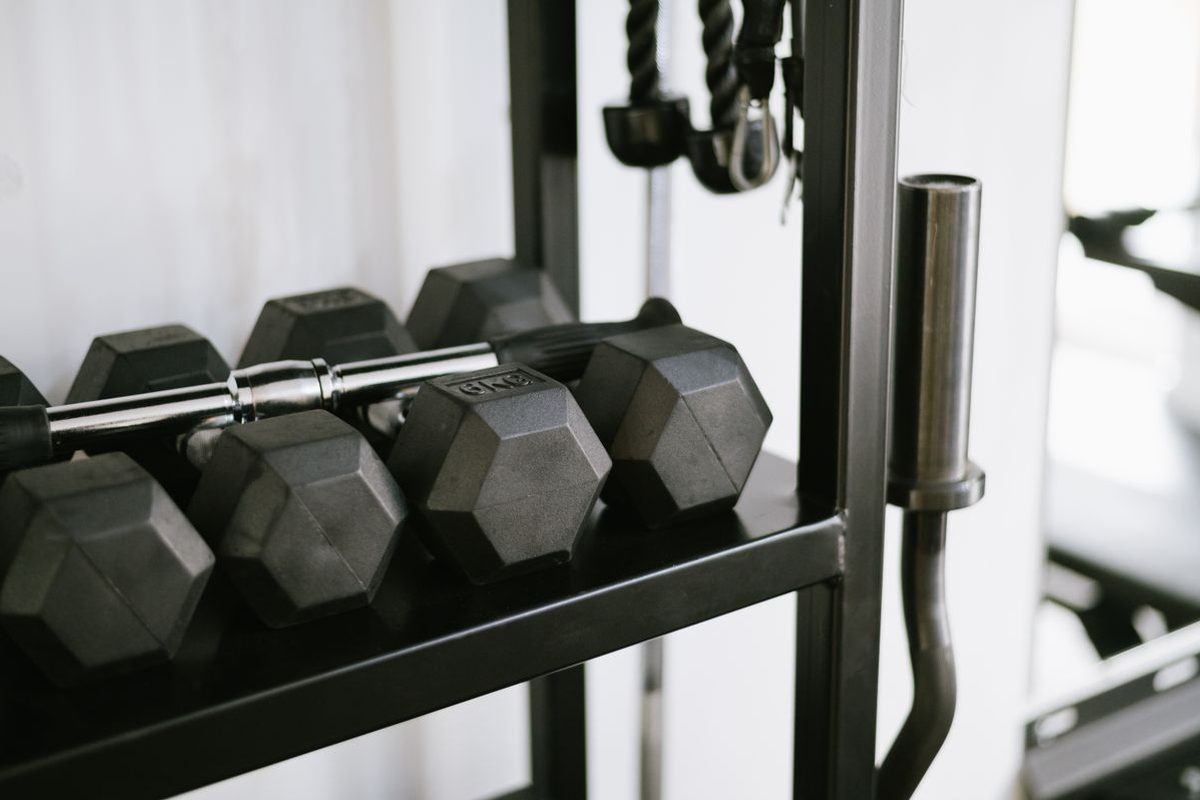
The dumbbell rack is shared access space. Taking weights from it and immediately starting curls directly in front of it can prevent others from retrieving or returning their own equipment. A bench placed too close creates the same problem for the entire set.
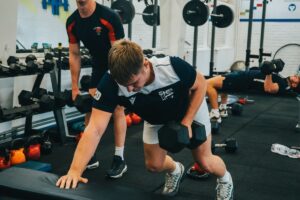
After choosing dumbbells, the lifter should move to a suitable exercise area with room for the full movement. The exact distance depends on the room. The goal is enough clearance for others to approach the rack and pass without squeezing around a moving weight.
Mirror access does not create ownership of the space in front of it. A person checking form can choose an angle that leaves traffic flowing. Another person retrieving weights should avoid walking into the path of an active exercise. Both sides benefit from noticing the movement around them.
Walkways also serve people carrying equipment, using mobility aids, or navigating unfamiliar surroundings. Bags, water bottles, loose bands, and tripods belong where the facility permits them and outside routes of travel. Courtesy includes making room for people whose space needs differ from those of the person lifting.
Respect the working area around a set
A heavy lift deserves an unobstructed area. Someone who needs to pass should wait briefly when moving through would distract the lifter or interfere with the bar. Conversations, plate collection, and questions about remaining sets are usually better timed between repetitions or sets.
Spotting should be agreed upon. Touching a bar unexpectedly can disrupt control, even if the intention is helpful. In an apparent emergency, immediate assistance may be appropriate, but routine unsolicited physical help is different from a requested spot.
3. Adapt circuits and supersets to a busy gym
Circuits and supersets can be useful training methods. The etiquette problem arises when one person tries to reserve several popular stations during peak demand. A towel on one machine, a bottle on another, and a phone on a third can leave multiple people waiting while only one station is being used.
During a quiet period, moving between two available exercises may have little effect on anyone else. When the room fills, that same plan becomes less practical. A considerate member adjusts the workout to the conditions instead of treating the original plan as a reservation system.
Options include pairing a machine with an exercise using nearby portable equipment, doing straight sets, or saving a complex circuit for a less crowded time. Portable equipment still needs an appropriate space. Spreading dumbbells, bands, and mats across a busy walkway merely moves the problem.
When another member asks to use a station between circuit rounds, a clear explanation helps. A short description of the planned return and a willingness to share may work. If the arrangement would interfere with safe equipment use, choosing a different exercise is usually simpler than arguing over who reached the machine first.
Practical example: A planned three-machine circuit may work at midday but create queues after work. Keeping one main station and replacing the other movements with available alternatives allows training to continue while more members use the room.
4. Share machines when the setup makes sense
Working in means alternating sets on the same piece of equipment. It often works well on a selectorized machine, where a pin changes resistance quickly. Two people using very different loads can still share if seat position and other settings are easy to adjust.
A brief request between sets is usually enough to start the conversation. The current user can explain how many sets remain and whether alternating is feasible. Both people should remember their own settings, make changes carefully, and leave the machine ready for the next set.
Sharing is less straightforward when setup differences are large. A heavily loaded squat bar may require considerable plate changes, different rack heights, and adjustments to safety supports. That does not make sharing impossible, but the time, effort, and safety demands deserve consideration.
Long rest periods are not automatically rude. Strength training can require substantial rest, particularly after demanding sets. Phone use alone does not prove that someone is wasting time; it may involve a rest timer, workout log, or accessibility tool. The relevant questions are whether the station is still being used and whether a reasonable sharing arrangement is available.
There is no universal rule granting a rack for exactly 30 minutes or making 40 minutes unacceptable. Facility policies, available stations, training demands, and waiting members all matter. A courteous lifter remains aware of others and avoids adding unnecessary delays during peak hours.
When sharing is not practical
A polite refusal can still include useful information: the number of sets remaining or an approximate finish time. The person waiting can choose a substitute or return later. Neither person needs to justify every detail of a workout to a stranger.
Some situations call for staff assistance. Disagreements over reservations, repeated equipment monopolizing, or an unclear policy are easier to resolve through the facility than through escalating personal criticism. Staff can clarify a consistent rule for everyone.
5. Leave the station clean and communicate calmly
Returning equipment and wiping it down belong to the same handoff. Sweat left on a seat or pad is unpleasant for the next user, and shared surfaces also need proper cleaning. Facilities usually provide a product and instructions suitable for their equipment.
The CDC’s guidance for athletic facilities recommends cleaning shared equipment after each use and allowing it to dry before reuse. Members should follow product directions, including any required contact time, and avoid applying cleaning chemicals to skin.
A quick dry wipe is not necessarily the same as proper disinfection. At the same time, drenching electronics or using an unsuitable chemical can damage equipment. The useful habit is following the gym’s process and asking staff when supplies or directions are missing.
Communication works best when it focuses on a specific situation. A question about remaining sets is more useful than an accusation about laziness. A reminder that a plate is blocking lighter weights is more actionable than a judgment about another member’s generation or training experience.
People new to a gym may need one clear explanation. People returning after injury may move slowly or require a particular setup. Courtesy includes allowing for circumstances that are not visible. A busy room can still feel welcoming when members avoid assumptions about one another.
Common situations and reasonable responses
- A loaded machine appears empty: Check nearby and ask whether it is in use before unloading. A member may be briefly retrieving a needed item.
- A bench has only a towel on it: Ask a nearby member or staff if its status is unclear. Personal items should not function as indefinite reservations.
- The preferred station is occupied: Ask about remaining sets, consider working in, or use a familiar alternative that serves the session’s goal.
- A member is filming: Follow facility policy and avoid obstructing others. Recording a workout does not create exclusive rights to a shared area.
- An interaction becomes aggressive: Step away and involve staff. A disagreement about equipment does not require a personal confrontation.
A small amount of planning also helps. Arriving with a primary exercise and one suitable substitute reduces pressure when the room is busy. The guide to planning cardio and weights offers context for organizing a flexible session.
A welcoming gym is a shared responsibility
Gym etiquette is a practical agreement among people sharing limited space. Returned plates, accessible storage, clear walkways, realistic circuits, sensible sharing, and clean surfaces make the room work better for everyone.
Most situations need only a small adjustment or a brief conversation. Experienced members can model helpful habits, newcomers can ask questions, and staff can resolve unclear rules. The result is a weight room where the effort goes into training and more people feel comfortable returning.
Video Summary
For more evidence-based nutrition and fitness tips, subscribe to our channel: https://www.youtube.com/@Vitality-and-Wellness
Looking for extra help with your fitness goals? Check out the personalized Nutrition Program at Parkway Athletic Club: parkwayathleticclub.com/nutrition
Disclaimer: This content is for educational purposes and does not replace personalized medical advice.