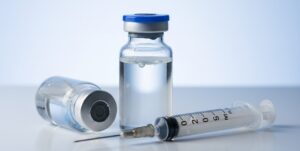
Interest in MK-677 has grown rapidly among people focused on muscle gain, recovery, sleep quality, and age-related performance decline. It is often discussed alongside peptide-based growth hormone secretagogues and even compared with prescription hormone therapies. That comparison can be misleading if the underlying mechanisms are not clearly understood. MK-677 is not growth hormone itself, and it is not the same thing as a traditional hormone replacement strategy. It is better described as an oral ghrelin receptor agonist designed to stimulate the body’s own release of growth hormone and raise insulin-like growth factor 1, commonly called IGF-1.
That distinction matters because the selling point of MK-677 is convenience. It is taken orally rather than by injection, which makes it appealing to people who want to avoid peptide injections or more complex protocols. At the same time, convenience should not be confused with certainty. The compound has been studied in humans, but the evidence is still far more limited than what people often assume when they see dramatic online claims about muscle growth, anti-aging, or hormone optimization.
This article breaks down how MK-677 compares with “real hormones” and hormone-based approaches, what it may help with, where its limitations show up, and why blood work, sleep, diet, and long-term health still matter more than any one molecule.
What MK-677 Actually Is
MK-677, also known as ibutamoren, is an orally active growth hormone secretagogue. In plain language, that means it encourages the body to release more growth hormone rather than supplying growth hormone directly. It does this by activating the ghrelin receptor, the same signaling pathway involved in hunger and energy regulation. When that receptor is stimulated, growth hormone secretion rises, and IGF-1 levels can rise as well.
This makes MK-677 fundamentally different from direct hormone replacement. With growth hormone therapy, a person is receiving the hormone itself. With peptide-based secretagogues, the body is being nudged through signaling pathways to release more of its own hormone. MK-677 falls into that second category, but it stands apart because it is a small molecule taken by mouth instead of a peptide taken by injection.
MK-677 is not the same as injecting growth hormone. It is more like pushing the body’s signaling system to ring the bell for more growth hormone release.
Why People Compare It With “Real Hormones”
The comparison usually comes from outcome goals rather than chemistry. People interested in MK-677 are typically looking for the same broad benefits often associated with growth hormone optimization: better recovery, easier muscle retention, higher IGF-1, improved sleep quality, and support during periods of intense training or aging-related decline. Because the goals overlap, the products get discussed together.
But overlapping goals do not mean equal evidence, equal safety, or equal predictability. Prescription hormone therapies and FDA-approved endocrine treatments are typically tied to specific diagnoses, dosing standards, monitoring frameworks, and better characterized side effect profiles. MK-677, by contrast, sits in a grayer area of performance and longevity culture, where enthusiasm often moves faster than high-quality long-term evidence.
What the Human Research Suggests
Human studies on ibutamoren do show real biological effects. Research in older adults has found that MK-677 can increase pulsatile growth hormone release and elevate IGF-1. Some studies have also reported increases in fat-free mass and improvements in markers tied to anabolic activity. That is one reason the compound continues to draw attention in both performance and anti-aging discussions.
However, the same studies also highlight a core issue: increasing growth signals is rarely isolated to muscle alone. In research involving older adults, fasting blood glucose increased in some participants, and that matters because any intervention that pushes growth and insulin-related pathways deserves more caution than online marketing usually suggests. Biology does not offer one-way benefits. Improved anabolic signaling often comes with tradeoffs involving appetite, fluid balance, or glucose handling.
For readers who want to review the evidence directly, one useful starting point is a human study on oral MK-677 and body composition in healthy older adults, along with a broader review of growth hormone secretagogues and their safety considerations: PubMed study on MK-677 in older adults and review of growth hormone secretagogues.
Potential Benefits of MK-677
1. Increased IGF-1 and Growth Hormone Signaling
The main appeal of MK-677 is its ability to raise growth hormone and IGF-1 without injections. For people whose baseline IGF-1 is low or who are interested in anabolic support, that is a meaningful feature. It may offer a way to stimulate hormone output without directly administering the hormone itself.
2. Better Sleep Quality
One of the most commonly reported reasons people stay interested in MK-677 is sleep. Growth hormone secretion is closely tied to slow-wave sleep, and deeper sleep architecture is one of the more plausible reasons some users describe more restorative nights. Better sleep can also indirectly improve recovery, mood, training output, and body composition. This does not make MK-677 a sleep medication, but it helps explain why some individuals notice a difference in sleep depth.
The connection between deep sleep and growth hormone release is well established in the literature. For background on this relationship, see this review on sleep and growth hormone physiology: growth hormone and sleep review.
3. Lean Mass and Recovery Support
Because growth hormone and IGF-1 play roles in protein turnover, tissue repair, and overall anabolic signaling, MK-677 is often used by people trying to preserve or add lean mass. In practical terms, the attraction is not only size. It is also about recovering better from training, sleeping more deeply, and maintaining output during physically demanding routines.
That said, the strongest case for MK-677 is not that it creates dramatic transformation on its own. The stronger case is that it may amplify the effects of already solid fundamentals such as sleep, nutrition, resistance training, and adequate calorie or protein intake.
The Limits and Risks People Need to Understand
Appetite Can Increase Significantly
Because MK-677 works through the ghrelin receptor, it can noticeably increase hunger. That may sound helpful in a bulking phase, but it is not automatically an advantage. For some people, stronger appetite makes dietary control harder, increases water retention, and leads to body composition results that look far less “clean” than expected.
Glucose and Insulin Concerns
This is one of the biggest reasons caution matters. If a person is already insulin resistant, prediabetic, or struggling with metabolic health, pushing growth pathways may work against long-term health goals. A gain in anabolic signaling is not automatically a gain in metabolic resilience. For this reason, any serious discussion of MK-677 should include fasting glucose, insulin sensitivity, and ongoing lab monitoring.
Water Retention and Swelling
Another issue commonly raised with growth-promoting pathways is fluid retention. Some people describe feeling puffy or noticing swelling, especially when doses are too aggressive or when multiple compounds are being combined. Even if someone is more interested in performance than anti-aging, that still matters because appearance, blood pressure, comfort, and recovery can all be affected.
Long-Term Outcome Questions
Perhaps the most important limitation is what remains unknown. There is no strong human evidence showing that MK-677 extends lifespan. In fact, some classic longevity models emphasize lower insulin signaling or reduced growth pathway activation in certain contexts, which complicates the idea that “more growth” automatically means better aging. This is why people who are serious about long-term health should separate the goals of muscle gain, sleep support, and longevity instead of assuming they are always aligned.
How It Compares With Hormone-Based Approaches
When people say “real hormones,” they may mean direct growth hormone therapy or peptide protocols that more directly target growth hormone release. The most obvious difference is delivery. MK-677 is oral. Many peptide-based secretagogues require injections. For some people, that convenience alone is enough to make MK-677 feel like the easier option.
But easier is not necessarily better. Hormone-based treatment plans that are prescribed and monitored are generally built around defined medical goals, lab work, contraindications, and more predictable clinical oversight. MK-677 may raise IGF-1 and support some of the same outcomes, but it is often used in a far less structured way. That gap between mechanism and monitoring is where many problems begin.
It is also worth noting that some prescription therapies have specific FDA-approved uses that do not translate into general anti-aging or bodybuilding use. A therapy that has a legitimate place in one narrow medical context should not automatically be treated as interchangeable with a general “hormone optimization” stack.
Why Sleep, Diet, and Training Still Matter More
A major mistake in this category is assuming that the molecule does the heavy lifting. In reality, growth hormone support is most meaningful when the rest of the system is working. Deep sleep is one of the body’s natural windows for hormone pulsation. Resistance training creates the demand for recovery and adaptation. Nutrition supplies the raw materials for repair. If those fundamentals are poor, adding MK-677 often produces a weaker return and a higher chance of side effects without the outcome people hoped for.
That is especially important for anyone chasing muscle gain while ignoring recovery habits. A poor diet, inconsistent sleep, excess alcohol, unmanaged stress, or no structured resistance program can limit the upside of any growth-oriented intervention. In other words, the compound is not magic. It may amplify a strong routine, but it rarely rescues a weak one.
What About Stacking?
In performance circles, MK-677 is often discussed as part of a stack rather than a stand-alone option. The logic is that one compound raises baseline signaling while others are used to influence pulsatility, recovery, appetite, or connective tissue support. That stacking mindset is common, but it also multiplies uncertainty. Every added compound introduces more variables, more expense, and more room for side effects or misleading interpretations of lab work.
For some people, stacking is attractive because lower doses of multiple agents may seem gentler than one high dose of a single product. In theory, that can make sense. In practice, it also makes it harder to know what is helping, what is causing the downside, and whether the overall plan still aligns with long-term health.
Is MK-677 Better Than Real Hormones?
The best answer is that it depends on the goal.
- If the goal is convenience and avoiding injections, MK-677 has a clear advantage.
- If the goal is evidence depth, clinical structure, and better-defined monitoring, supervised hormone-based care has the stronger foundation.
- If the goal is better sleep and modest support for IGF-1 and lean mass, MK-677 may offer useful effects for some people.
- If the goal is proven longevity, neither marketing language nor gym culture has established MK-677 as a shortcut.
That is why the question should not simply be “What works better?” The better question is “Better for what, and at what cost?” A person focused on bodybuilding, a person dealing with age-related hormone decline, and a person focused on long-term cardiometabolic health may all judge the same compound very differently.
A More Practical Way to Think About It
MK-677 makes the most sense to analyze as a signal amplifier. It may increase growth hormone output, elevate IGF-1, support sleep depth, and help some users with recovery or lean mass goals. But signal amplification is not automatically health optimization. The body still has to deal with the downstream consequences of stronger growth signaling, including appetite shifts, fluid changes, and possible stress on glucose control.
That is why thoughtful use, if considered at all, should begin with basics: blood work, sleep quality, dietary consistency, cardiovascular risk awareness, and realistic expectations. People with diabetes, prediabetes, active cancer concerns, unexplained swelling, or unresolved metabolic issues should be especially cautious and should not treat online discussion as medical clearance.
Final Takeaway
MK-677 is not a miracle, but it is not meaningless either. It has real physiological effects and enough human evidence to justify serious discussion. What it does not have is a free pass from medical scrutiny. Compared with direct hormone therapies and better-defined clinical endocrine strategies, it offers convenience and a different route of action, but not the same level of certainty or long-term outcome data.
For some people, the biggest noticeable benefit may be better sleep and a modest improvement in recovery. For others, the drawbacks may show up faster in the form of stronger appetite, fluid retention, or worsening glucose control. That tension is exactly why this topic needs more nuance than online before-and-after claims usually provide.
The most balanced conclusion is simple: MK-677 may help amplify growth-related pathways, but smarter use of sleep, nutrition, training, and medical oversight will always matter more than chasing the strongest signal possible.
FAQ
Is MK-677 the same as growth hormone?
No. MK-677 is an oral ghrelin receptor agonist that stimulates the body’s own growth hormone release rather than supplying growth hormone directly.
Can MK-677 improve sleep?
Some users report deeper sleep, and this is biologically plausible because growth hormone secretion is closely linked to slow-wave sleep.
Does MK-677 build muscle on its own?
It may support lean mass and recovery, but it is not a substitute for training, diet, protein intake, and overall recovery practices.
What is the biggest downside?
Appetite increases, water retention, and possible effects on blood glucose are among the most important concerns.
Is it proven for longevity?
No. Current human evidence does not prove that MK-677 extends lifespan.
Video Summary
For more evidence-based nutrition and fitness tips, subscribe to our channel: https://www.youtube.com/@Vitality-and-Wellness
Looking for extra help with your fitness goals? Check out the personalized Nutrition Program at Parkway Athletic Club: parkwayathleticclub.com/nutrition
Disclaimer: This content is for educational purposes and does not replace personalized medical advice.