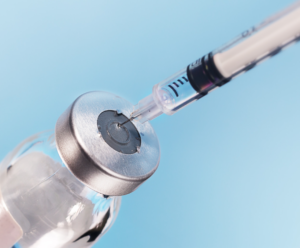
The word “enhanced” gets thrown around in gyms, on social media, and in sports culture as if it means one specific thing. In reality, “enhanced” is a broad umbrella that can describe everything from taking creatine to using prescription hormone therapy to experimenting with unapproved compounds. That range matters—because the health risks, legal risks, and ethical implications vary dramatically depending on what “enhancement” actually refers to.
This article breaks down the concept of enhancement in a practical, evidence-based way. The goal is not to glamorize shortcuts or shame personal choices. The goal is to clarify what different categories of “enhancers” can and cannot do, why training and nutrition still determine the outcome, and how to make safer decisions—especially for people who care about long-term performance, mobility, and longevity.
What “Enhanced” Actually Means (And Why the Definition Matters)
In everyday fitness talk, “enhanced” often implies one of two things: either (1) an athlete is using performance-enhancing drugs (PEDs) to gain muscle, reduce fat, or speed recovery; or (2) an athlete is using any compound that improves performance beyond what diet and training would do alone.
The second definition is more accurate, but also more confusing—because it includes legitimate, well-studied supplements as well as illegal or unregulated substances. For clarity, it helps to think of enhancement as a spectrum:
- Foundational enhancers: sleep optimization, structured training, adequate protein, and appropriate calories.
- Legal supplements with evidence: creatine monohydrate, caffeine, some electrolytes, and certain nutrients when deficient.
- Medical therapies: prescription hormones used under medical supervision for diagnosed conditions.
- Gray-area compounds: substances sold online with inconsistent quality control and unclear clinical evidence.
- Illegal or banned PEDs: anabolic steroid “stacks” and other doping agents used to push extreme outcomes.
When people argue about enhancement, they often skip this categorization and talk past each other. A person discussing creatine and a person discussing an anabolic steroid cycle may both use the word “enhanced,” but the risk profile is not even close to the same.
The Big Reality Check: Enhancement Doesn’t Replace the Work
One of the most important points that gets lost in “enhanced vs natural” debates is this: no supplement or medication can outwork a lifestyle that is consistently undermining results. Training, nutrition, and recovery set the ceiling. Enhancement may help someone approach that ceiling faster, recover better between sessions, or feel better while doing the work—but it does not create a strong physique without consistent effort.
This matters for two reasons:
- Expectations: many people expect “enhancement” to produce dramatic results without changing training volume, intensity, sleep, stress, or diet quality.
- Risk tolerance: the more aggressive the compound, the more important it becomes that the “basics” are already dialed in—otherwise the risk increases while the payoff stays small.
A simple way to frame it is: if the foundation is weak, the “enhancer” is mostly wasted. If the foundation is strong, the same compound may produce a meaningful difference—while still requiring careful monitoring and realistic expectations.
Four Categories of “Enhancement” and How They Differ
1) Evidence-Based Supplements
These are legal, widely available products that have supportive research for specific outcomes. They do not turn someone into a different athlete overnight, but they can improve performance margins. The best-known example is creatine monohydrate.
According to the NIH Office of Dietary Supplements, creatine monohydrate is one of the most studied sports supplements and can improve performance in short-duration, high-intensity efforts (like repeated sprints or heavy sets), often alongside strength training. The same NIH resource also notes that the most consistent side effect observed is weight gain, largely due to water retention and possibly increased training capacity over time.
NIH ODS: Dietary Supplements for Exercise and Athletic Performance
What this means in practice:
- Creatine can help performance in repeated high-effort training sessions.
- Creatine does not replace training; it supports the ability to train harder or recover a bit faster between efforts.
- Scale weight may rise even if body composition improves (more water stored in muscle is common).
A key takeaway: when a supplement’s effect is real, it typically shows up as a modest advantage that compounds over months of consistent training—not as instant transformation.
2) Medical Optimization (Prescription Therapies)
The next category includes treatments that are not “supplements” in the casual sense. These are prescription therapies used under medical guidance for people with diagnosed conditions or clinically meaningful symptoms. Testosterone therapy is one of the most discussed examples.
In the context of aging and health, hormone levels can change over time, and some individuals may be diagnosed with hypogonadism (clinically low testosterone with symptoms). In those cases, testosterone therapy may be considered by a clinician. But it is still a medical decision with trade-offs and monitoring requirements.
The U.S. FDA has updated class-wide labeling for testosterone products based on data from a large trial (TRAVERSE). In its 2025 update, the FDA stated that the trial did not show an increased risk of major adverse cardiovascular outcomes in the studied population, while also requiring labeling updates including warnings related to blood pressure for some products.
FDA: Class-wide labeling changes for testosterone products (2025)
The practical message is not “safe” or “unsafe” as a universal label—it is:
- Appropriate use matters (medical indication, proper dosing strategy, and follow-up).
- Monitoring matters (lab work and symptom tracking are not optional).
- Risk varies by person (health history, sleep quality, cardiovascular risk factors, and other medications change the equation).
For athletes, this category also intersects with sports rules. Some leagues and governing bodies restrict or prohibit certain therapies regardless of medical context. That makes it essential for competitive athletes to verify what is permitted in their sport before starting anything that could trigger a positive test.
3) Gray-Area Compounds and “Research” Products
The third category includes compounds often marketed online as “research chemicals,” “peptides,” or “not for human use.” This space is where misinformation grows quickly, because personal testimonials can be persuasive while product quality is inconsistent and clinical data may be limited or still emerging.
Even when a compound is being studied in clinical trials, that does not automatically mean it is appropriate for personal use outside medical supervision. Trial design, dosage, eligibility criteria, safety monitoring, and purity controls are part of what makes research findings meaningful—and those guardrails are often missing when substances are obtained from non-medical channels.
The risk here is not only “side effects.” It is also:
- Purity uncertainty (what is on the label may not match what is in the vial).
- Dosage uncertainty (tiny errors can matter with potent compounds).
- Lack of monitoring (no labs, no baseline data, no professional oversight).
- False confidence from anecdotes that do not capture long-term outcomes.
For performance-minded people, the temptation is understandable: faster recovery, better energy, improved body composition, and sharper cognition all sound appealing. But the more “cutting edge” a claim is, the more careful the decision-making should become.
4) Illegal or Banned PED Use
The final category includes classic anabolic steroid stacks and other banned substances used to push extreme physiques or performance outcomes. This category is heavily regulated in sport for a reason: the risk-to-reward ratio changes as dosages and compound complexity increase.
It is also the category most people imagine when they say “enhanced,” even when the discussion is actually about something far milder—like creatine, caffeine, or medically supervised therapy.
A realistic point is worth acknowledging: even in this category, results still require intense training discipline. Enhancement does not create work ethic. But it can allow a person to tolerate more volume, recover faster, and maintain a larger physique than would otherwise be possible. That is precisely why many sports restrict it—because it can change the playing field.
Natural vs Enhanced: A More Useful Question
“Natural vs enhanced” is often asked as if it is a moral category. A more useful lens is:
Is the choice aligned with health, rules, and long-term goals—and is it being managed responsibly?
For example, creatine is “enhancing” in the sense that it can improve training performance. It is also found naturally in the diet and is widely researched. Medical therapies may be “enhancing” in the sense of restoring function or improving quality of life. Illegal PED use may be “enhancing” in the sense of enabling extreme outcomes—but with higher risks and often direct conflict with sports rules.
That is why the better question becomes: what kind of enhancement, for what purpose, at what cost, and under what safeguards?
A Simple “Teeter-Totter” Framework for Decisions
Every enhancement decision can be thought of like a teeter-totter balancing benefits on one side and costs on the other. The same compound can land differently depending on the person using it, how it’s used, and what they are trying to achieve.
| Consideration | Benefit Side | Cost / Risk Side |
|---|---|---|
| Training effect | More output per session | Overuse risk if recovery is mismanaged |
| Health impact | Better energy, body composition, function | Potential side effects; monitoring burden |
| Legality / sport rules | Within permitted standards | Sanctions, bans, disqualification |
| Quality control | Reliable product; predictable response | Contamination, mislabeling, inconsistent dosing |
| Psychology | Higher adherence and motivation | Dependence on “shortcuts,” risky escalation |
The more “medical” or “experimental” an intervention becomes, the more weight should shift toward professional oversight, lab monitoring, and conservative decision-making.
The Non-Negotiables: Training, Diet, Recovery, and Transparency
Training Still Drives Adaptation
Strength, endurance, and physique changes come from adaptation to training stress. Supplements and therapies may support training capacity, but they do not replace progressive overload, intelligent programming, or consistent practice.
Nutrition Determines the Direction of Change
Energy balance, protein intake, and overall diet quality shape whether performance improvements translate into better body composition. Many people chase “enhancers” while ignoring the inputs that matter most: sleep, protein adequacy, fiber, hydration, and calorie control.
Recovery Is Where Results Accumulate
Inadequate sleep and high stress can blunt performance and worsen health markers, even if training is consistent. If an “enhancer” improves motivation but lifestyle stress remains unmanaged, the outcome often becomes burnout rather than sustainable progress.
Transparency Protects Health
A practical safety rule is simple: if something cannot be discussed honestly with a qualified clinician, that is a red flag. Not because the clinician is there to shame decisions, but because clinicians can help identify risk factors, order labs, and catch problems early. Secrets eliminate safety nets.
What “Responsible Use” Looks Like in Real Life
Responsible enhancement is less about a specific compound and more about a process:
- Start with a clear goal (performance, recovery, longevity, symptom relief) and define what success looks like.
- Use a baseline (training log, sleep metrics, body composition, and relevant labs when appropriate).
- Change one variable at a time so the impact is measurable.
- Track outcomes (performance markers, mood, blood pressure, sleep quality, adverse symptoms).
- Reassess regularly rather than escalating because of hype or impatience.
For competitive athletes, responsible use also includes verifying anti-doping rules, third-party testing for supplements when possible, and avoiding gray-area products that create contamination risk.
Common Misconceptions That Derail Good Decisions
Misconception 1: “If it works for someone else, it’ll work the same for everyone.”
Individual response varies. Genetics, training age, diet consistency, sleep, stress, and medical history change outcomes. What helps one person may do little for another—or create side effects that outweigh benefits.
Misconception 2: “If it’s natural, it’s automatically safe.”
“Natural” is not a safety guarantee. Natural substances can still cause side effects, interact with medications, or be unsafe at high doses. Safety comes from evidence, quality control, and appropriate use.
Misconception 3: “If it’s medical, it’s risk-free.”
Medical therapies can be appropriate and beneficial, but they still require monitoring, correct diagnosis, and follow-up. “Prescription” does not mean “no trade-offs.”
Misconception 4: “Enhancement is the reason someone looks fit.”
This is one of the most common and least helpful assumptions in fitness culture. Even where enhancement exists, the visible result typically reflects years of training volume, diet consistency, and lifestyle habits. Reducing the outcome to one compound ignores the work that produced it—and leads many people to chase the wrong solution.
FAQ
Does creatine only help bodybuilders?
Creatine is best supported for repeated high-intensity efforts and strength training. That can benefit many athletes—not only bodybuilders—especially in sports requiring short bursts of effort with brief recovery.
NIH ODS fact sheet
Is testosterone therapy the same as “doing steroids”?
Testosterone therapy is a medical treatment intended for specific clinical scenarios and should be guided by diagnosis and monitoring. It is not equivalent to high-dose anabolic “stacks,” but it is still a serious medical decision with risks and follow-up requirements.
FDA testosterone labeling update
What’s the biggest safety mistake with enhancement?
Skipping the fundamentals (training, nutrition, recovery) while using higher-risk compounds—and keeping it secret from qualified medical care. That combination increases risk while minimizing payoff.
How should athletes think about “gray-area” products?
The main issues are inconsistent quality control, limited clinical evidence, and increased risk of adverse outcomes or contamination. The more experimental the product, the more important professional oversight becomes.
Video Summary
The discussion emphasizes that “being enhanced” can mean very different things—from basic supplements like creatine to medically supervised hormone therapy to illegal performance drugs. It also highlights a central truth: no compound replaces consistent training, diet quality, and recovery. Enhancement may support performance and longevity, but it should be approached with a risk–benefit mindset, full transparency with healthcare professionals, and realistic expectations about what actually drives results.
For more evidence-based nutrition and fitness tips, subscribe to our channel:
https://www.youtube.com/@Vitality-and-Wellness
Disclaimer: This content is for educational purposes and does not replace personalized medical advice.